
Last updated: 22 November 2026.
When you are organising a funeral, the question of who travels in which car can feel surprisingly difficult. There are no strict rules, but there are customs most families follow, and knowing them makes the day calmer. This guide explains funeral car etiquette in the UK, how many cars you are likely to need, and how the cortege works on the day.
The order of the funeral cortege
A traditional cortege is led by the hearse carrying the coffin. In many funerals the funeral director walks a short distance in front of it as it sets off. The family cars follow directly behind, then any other mourners in their own cars.
Who rides in the first funeral car?
The first car is normally for the people closest to the person who has died: their partner or spouse, their children and sometimes their parents. If the family is large or complicated, the simplest guide is this: the first car is for whoever would sit in the front row at the service.
Who goes in the second and third cars?
The following cars are usually for grandchildren, brothers and sisters, other close relatives and very close friends. Families sometimes give a seat to someone who would struggle to drive on the day, such as an elderly relative.
How many funeral cars do you need?
| Car | Passengers | Good for |
|---|---|---|
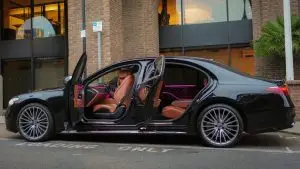
| Mercedes S-Class | Up to 3 | The immediate family |
| Range Rover | Up to 4 | A small family group |
| Mercedes V-Class | Up to 7 | Keeping a larger family together |
| Mercedes Sprinter | Up to 7 | Families travelling with bags or coming from the airport |
Count the people who should travel behind the hearse, not everyone attending. Most guests make their own way to the service.
Funeral transport across London
We provide chauffeur-driven cars for the family and mourners, following the hearse and staying with you until the end of the day. See our funeral transport in London page. Call +44 7956 453332 or request a quote.
Etiquette on the day
- Be ready a little before the agreed time so the cortege can leave on schedule.
- Agree in advance who sits in each car so nobody has to decide at the door.
- Do not overtake or cut into a cortege if you are driving separately.
- Phones on silent in the cars as well as at the service.
- Let the chauffeur and funeral director set the pace; they are used to keeping the procession together.
Faith and family traditions
Customs vary. Some faiths hold the burial very quickly, and some families prefer only men or only women to travel in certain cars. Tell your funeral director and car provider what matters to your family and they will plan around it.
Frequently asked questions
Who travels in the first funeral car?
Usually the closest family: the partner or spouse, children and sometimes parents of the person who has died. The rest of the family and close friends follow in the next cars.
How many funeral cars do we need?
Work out who should travel in the cortege, then divide by the seats in each car. A Mercedes S-Class takes up to 3, a Range Rover up to 4, and a V-Class or Sprinter up to 7. Most families book one or two cars.
Do the funeral cars follow the hearse?
Yes. The family cars travel directly behind the hearse, at its pace, from the home or funeral home to the service.
Can the cortege leave from the family home?
Yes, many families gather at home so everyone can leave together behind the hearse. Tell your funeral director and car provider the address and time.
What happens to the cars during the service?
The chauffeurs wait nearby and are ready to take the family on to the burial, committal or wake when the service ends.